異位性皮膚炎、慢性蕁麻疹治療常用到的類固醇,會增加帶狀疱疹風險,用量越多風險越高 - 澳洲 9 萬人研究
帶狀疱疹是小時候得過的水痘病毒,躲在神經裡,等身體抵抗力變差時再發作。
注射或口服類固醇會壓抑免疫,是不是也會讓帶狀疱疹比較容易發作?
這篇澳洲新南威爾斯大學(University of New South Wales)、澳洲國立大學(Australian National University)團隊的研究,回答了這個問題。
澳洲近 9.5 萬人,追蹤 7 年
研究使用澳洲「45 and Up」大型世代研究的資料,對象是 45 歲以上的成人,共 94,677 人,追蹤時間中位數 7.36 年。
追蹤期間,有 20,048 人開始使用全身性類固醇(口服或注射),共有 6,294 人得到帶狀疱疹。
有用類固醇的患者,帶狀疱疹風險高 59%
和沒有用類固醇的人相比,有使用注射或口服類固醇的患者,帶狀疱疹風險高出 59%(1.59 倍)。
用量越多,風險越高
研究把類固醇的累積用量,換算成 prednisolone(一種常用的口服類固醇)的毫克數來比較:
- 累積不到 500 毫克:1.32 倍
- 500 到 1,000 毫克:1.74 倍
- 1,000 毫克以上:1.80 倍
使用類固醇一個月內,風險高達 6 倍
就算只拿過一次處方,使用後的一個月內,帶狀疱疹風險就是沒有用藥者的 6 倍。
到了第三個月,風險才回到跟沒有用藥的人差不多。
研究團隊的結論是:醫師開立類固醇要謹慎,盡量用最低的劑量、最短的療程。
異位性皮膚炎、慢性蕁麻疹患者更要留意
注射或口服類固醇,是異位性皮膚炎、慢性蕁麻疹發作時常用的治療。
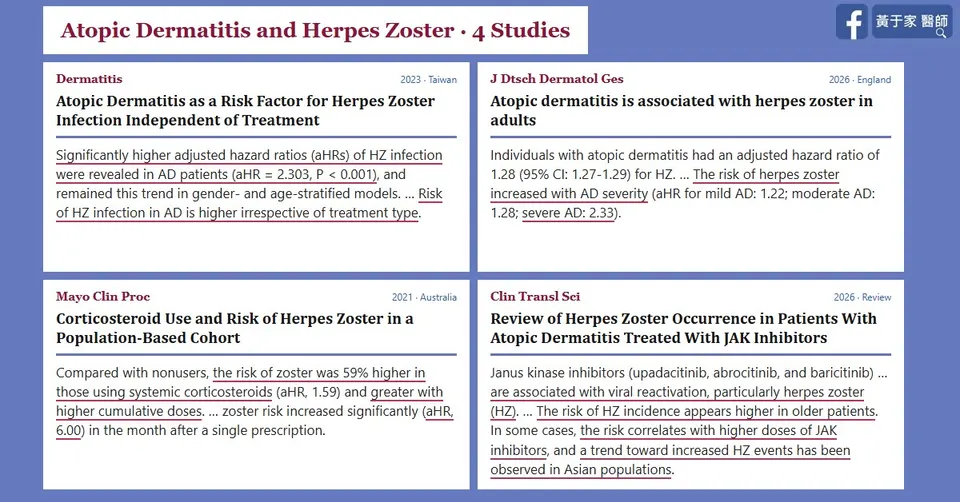
台灣健保資料庫研究發現,異位性皮膚炎患者得帶狀疱疹的風險,本來就是一般人的 2.3 倍;英國 1,300 萬人研究也發現,病情越嚴重,風險越高。
異位性皮膚炎本身的帶狀疱疹風險本來就比較高,若病情反覆、需要一再注射或口服類固醇,帶狀疱疹的風險可能又再往上加。
慢性蕁麻疹也是一樣,美國 20 萬人研究發現,近七成慢性蕁麻疹患者用過口服或注射類固醇,用得越久,高血壓、糖尿病、失眠、白內障等副作用就越多。
我在門診看到的
我的門診中,常見類固醇用了很多年仍無法改善的患者:
- 外擦、注射、口服類固醇都用過的異位性皮膚炎患者
- 口服類固醇、抗組織胺無改善的小兒異位性皮膚炎患者
- 手部濕疹多年,靠外擦超強類固醇、注射併口服類固醇度日的患者
- 長期口服類固醇,導致白內障、牙周反覆感染、高血壓的慢性濕疹患者
- 口服類固醇、抗組織胺無法改善,癢到不能睡的慢性蕁麻疹患者
我在長期使用類固醇、免疫抑制劑,真的安全嗎?一文中,也記錄過門診患者長期用藥後出現的問題。
所以我治療異位性皮膚炎、慢性蕁麻疹,目標是讓病情穩定下來,減少反覆使用類固醇的需要。
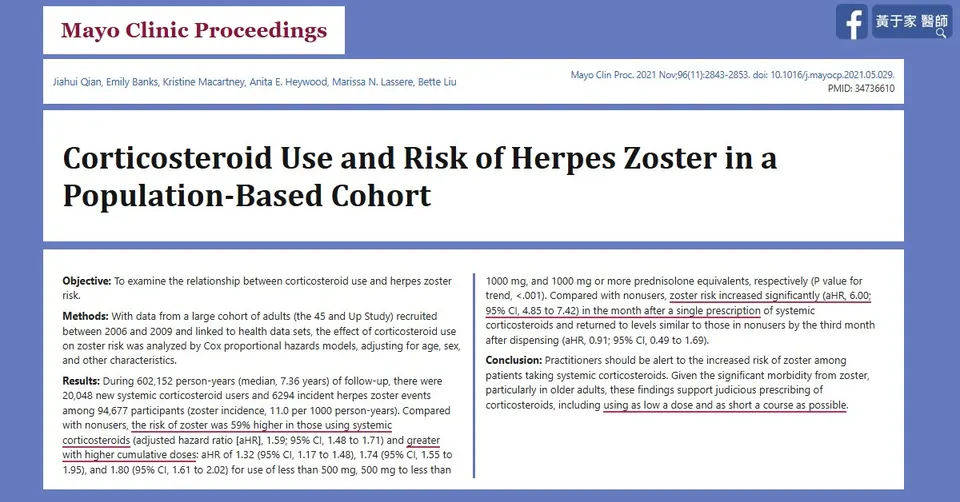
本篇研究,“Corticosteroid Use and Risk of Herpes Zoster in a Population-Based Cohort”,期刊摘要如下:
Objective:
To examine the relationship between corticosteroid use and herpes zoster risk.
Methods:
With data from a large cohort of adults (the 45 and Up Study) recruited between 2006 and 2009 and linked to health data sets, the effect of corticosteroid use on zoster risk was analyzed by Cox proportional hazards models, adjusting for age, sex, and other characteristics.
Results:
During 602,152 person-years (median, 7.36 years) of follow-up, there were 20,048 new systemic corticosteroid users and 6294 incident herpes zoster events among 94,677 participants (zoster incidence, 11.0 per 1000 person-years). Compared with nonusers, the risk of zoster was 59% higher in those using systemic corticosteroids (adjusted hazard ratio [aHR], 1.59; 95% CI, 1.48 to 1.71) and greater with higher cumulative doses: aHR of 1.32 (95% CI, 1.17 to 1.48), 1.74 (95% CI, 1.55 to 1.95), and 1.80 (95% CI, 1.61 to 2.02) for use of less than 500 mg, 500 mg to less than 1000 mg, and 1000 mg or more prednisolone equivalents, respectively (P value for trend, <.001). Compared with nonusers, zoster risk increased significantly (aHR, 6.00; 95% CI, 4.85 to 7.42) in the month after a single prescription of systemic corticosteroids and returned to levels similar to those in nonusers by the third month after dispensing (aHR, 0.91; 95% CI, 0.49 to 1.69).
Conclusion:
Practitioners should be alert to the increased risk of zoster among patients taking systemic corticosteroids. Given the significant morbidity from zoster, particularly in older adults, these findings support judicious prescribing of corticosteroids, including using as low a dose and as short a course as possible.
原始論文
Corticosteroid Use and Risk of Herpes Zoster in a Population-Based Cohort(外部網站)
Qian J, Banks E, Macartney K, Heywood AE, Lassere MN, Liu B. Mayo Clinic Proceedings. 2021;96(11):2843-2853. doi:10.1016/j.mayocp.2021.05.029
摘要引自 PubMed,著作權屬原作者與期刊。
論文摘要(中文翻譯)
以下為中文翻譯,僅供參考,內容以英文原文為準。
在一般族群世代中,類固醇使用與帶狀疱疹風險
目的:探討類固醇使用與帶狀疱疹風險之間的關係。
方法:使用一個大型成人世代(45 and Up 研究,2006 至 2009 年招募)並串連健康資料庫,以 Cox 比例風險模型分析類固醇使用對帶狀疱疹風險的影響,並校正年齡、性別及其他特徵。
結果:94,677 位參與者共追蹤 602,152 人年(中位數 7.36 年),期間有 20,048 位新的全身性類固醇使用者,發生 6,294 例帶狀疱疹(發生率每 1,000 人年 11.0 例)。與未使用者相比,使用全身性類固醇者的帶狀疱疹風險高 59%(校正風險比 1.59;95% 信賴區間 1.48–1.71),且累積劑量越高風險越高:累積劑量少於 500 毫克、500 至未滿 1,000 毫克、1,000 毫克以上(以 prednisolone 等效劑量計)的校正風險比分別為 1.32(1.17–1.48)、1.74(1.55–1.95)與 1.80(1.61–2.02)(趨勢檢定 P < .001)。與未使用者相比,單次領取全身性類固醇處方後的一個月內,帶狀疱疹風險明顯升高(校正風險比 6.00;95% 信賴區間 4.85–7.42),到領藥後第三個月回到與未使用者相近的程度(校正風險比 0.91;95% 信賴區間 0.49–1.69)。
結論:醫師應留意使用全身性類固醇的患者,帶狀疱疹風險會增加。由於帶狀疱疹會造成相當的病痛,特別是年長者,這些發現支持審慎開立類固醇,包括盡量使用最低劑量與最短療程。
相關治療紀錄
- 異位性皮膚炎,類固醇外擦、注射、口服無法改善,皮膚紅乾劇癢,難眠
- 小兒異位性皮膚炎,口服類固醇、抗組織胺無改善
- 多年手部濕疹,賴外擦超強類固醇、注射併口服類固醇度日
- 慢性濕疹,搔癢,賴長期口服類固醇,導致白內障、牙周反覆感染、高血壓
- 慢性蕁麻疹、慢性濕疹,四個月,口服類固醇、抗組織胺無法改善,癢到不能睡
- 類固醇治療後無改善的中醫經方治療實例