慢性蕁麻疹,近七成患者會口服或注射類固醇,類固醇用越久,副作用如高血壓、糖尿病、焦慮、失眠、白內障等就越多 - 美國 20 萬人研究
慢性蕁麻疹發作時又癢又腫,很多患者都有被開過類固醇的經驗。
治療指引其實只建議在急性惡化時短期使用類固醇。
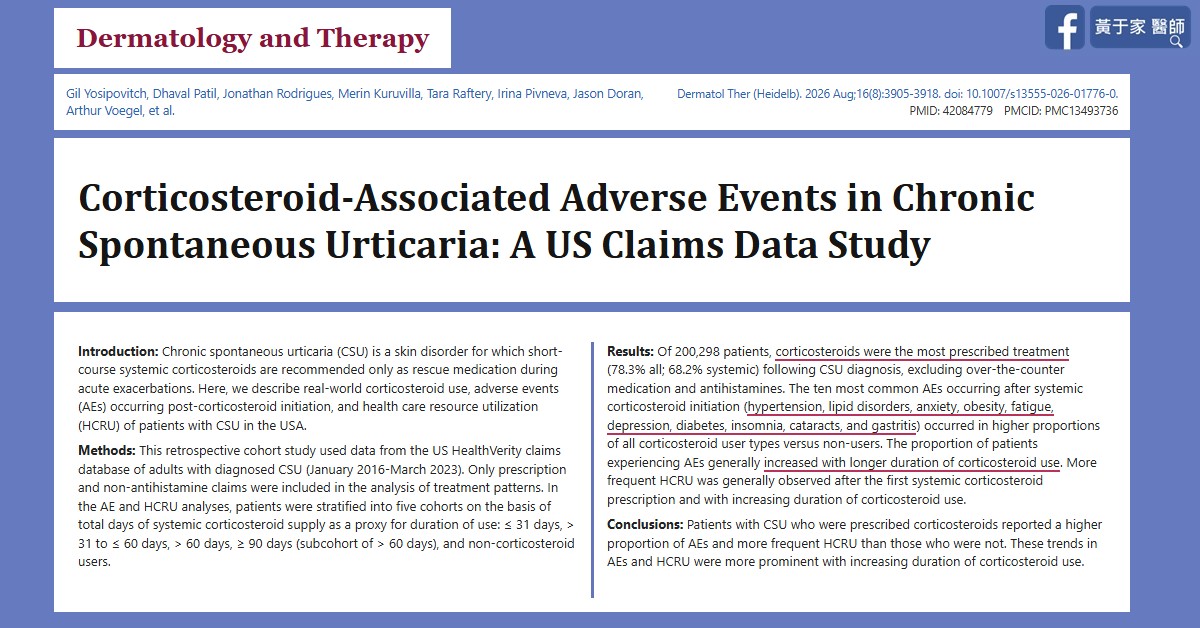
但這篇美國 20 萬人的研究發現,慢性蕁麻疹確診後,類固醇是最常被開立的藥物:將近八成的人用過類固醇,其中口服或注射的就將近七成。
用過類固醇的人,高血壓、血脂異常、焦慮、肥胖、疲倦、憂鬱、糖尿病、失眠、白內障、胃炎的比例都比較高,而且用得越久,比例越高。
這些副作用在門診並不少見,例如這位慢性濕疹,賴長期口服類固醇,導致白內障、牙周反覆感染、高血壓的患者。
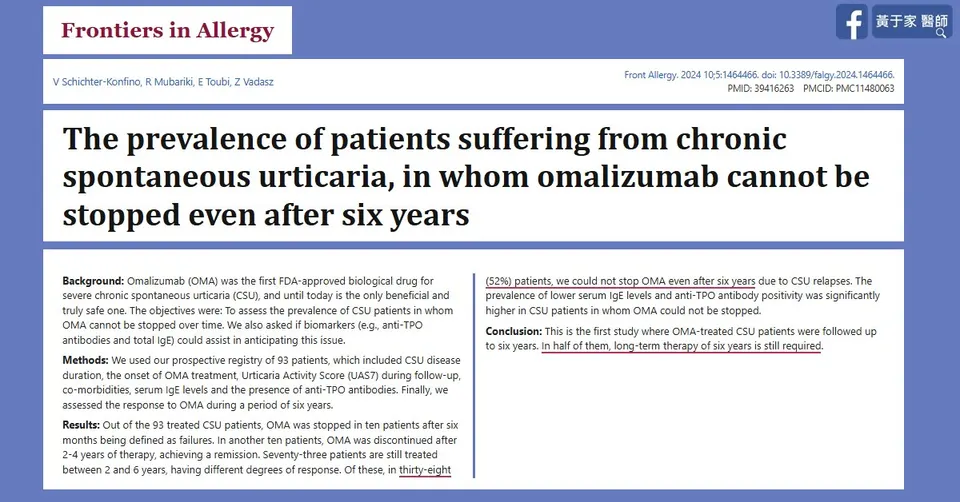
類固醇可以很快把症狀壓下來,但就像楊賢鴻教授的慢性蕁麻疹研究所說,一停抗組織胺、類固醇,症狀就會迅速回復,於是越用越久。
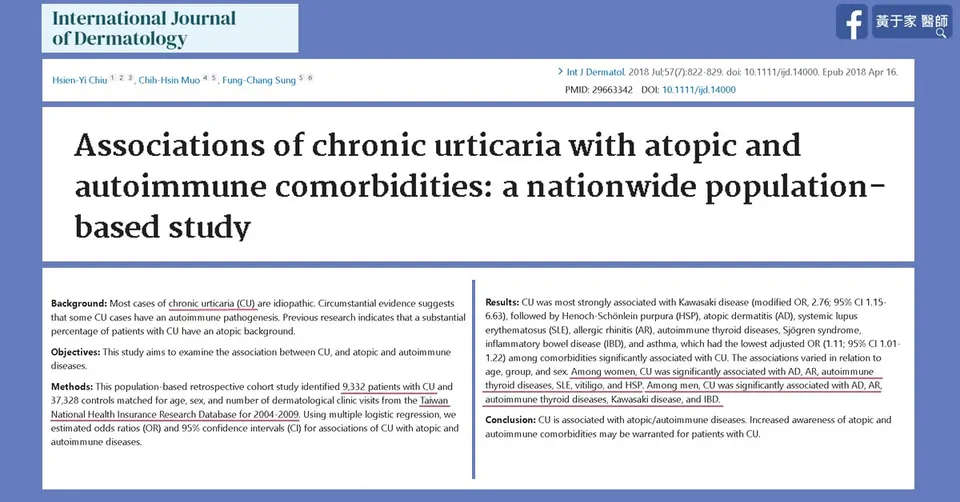
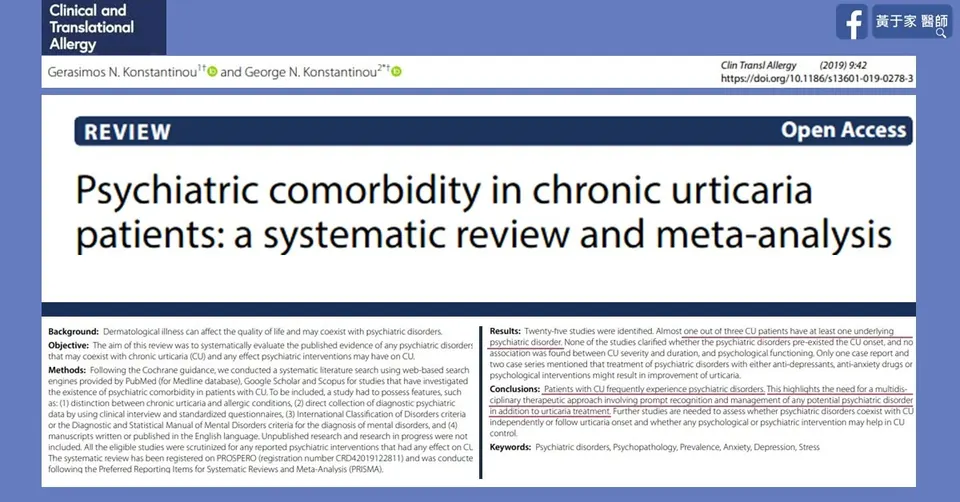
慢性蕁麻疹需要的,不只是把症狀壓下來,而是找出身體內在的原因,讓體質穩定下來。
本篇研究,“Corticosteroid-Associated Adverse Events in Chronic Spontaneous Urticaria: A US Claims Data Study”,期刊摘要如下:
Introduction:
Chronic spontaneous urticaria (CSU) is a skin disorder for which short-course systemic corticosteroids are recommended only as rescue medication during acute exacerbations. Here, we describe real-world corticosteroid use, adverse events (AEs) occurring post-corticosteroid initiation, and health care resource utilization (HCRU) of patients with CSU in the USA.
Methods:
This retrospective cohort study used data from the US HealthVerity claims database of adults with diagnosed CSU (January 2016-March 2023). Only prescription and non-antihistamine claims were included in the analysis of treatment patterns. In the AE and HCRU analyses, patients were stratified into five cohorts on the basis of total days of systemic corticosteroid supply as a proxy for duration of use: ≤ 31 days, > 31 to ≤ 60 days, > 60 days, ≥ 90 days (subcohort of > 60 days), and non-corticosteroid users.
Results:
Of 200,298 patients, corticosteroids were the most prescribed treatment (78.3% all; 68.2% systemic) following CSU diagnosis, excluding over-the-counter medication and antihistamines. The ten most common AEs occurring after systemic corticosteroid initiation (hypertension, lipid disorders, anxiety, obesity, fatigue, depression, diabetes, insomnia, cataracts, and gastritis) occurred in higher proportions of all corticosteroid user types versus non-users. The proportion of patients experiencing AEs generally increased with longer duration of corticosteroid use. More frequent HCRU was generally observed after the first systemic corticosteroid prescription and with increasing duration of corticosteroid use.
Conclusions:
Patients with CSU who were prescribed corticosteroids reported a higher proportion of AEs and more frequent HCRU than those who were not. These trends in AEs and HCRU were more prominent with increasing duration of corticosteroid use.
原始論文
Yosipovitch G, Patil D, Rodrigues J, et al. Dermatology and Therapy. 2026;16(8):3905-3918. doi:10.1007/s13555-026-01776-0
本文摘要依 CC BY-NC 4.0 授權轉載,著作權屬原作者。
論文摘要(中文翻譯)
以下為中文翻譯,僅供參考,內容以英文原文為準。
慢性自發性蕁麻疹的類固醇相關不良事件:美國保險申報資料研究
前言:慢性自發性蕁麻疹是一種皮膚疾病,治療指引只建議在急性惡化時短期使用全身性類固醇作為救援用藥。本研究描述美國慢性自發性蕁麻疹患者在真實世界中的類固醇使用情形、開始使用類固醇後發生的不良事件,以及醫療資源使用情形。
方法:本回溯性世代研究使用美國 HealthVerity 保險申報資料庫,對象為 2016 年 1 月至 2023 年 3 月間確診慢性自發性蕁麻疹的成人。治療模式分析只納入處方藥、且排除抗組織胺的申報資料。在不良事件與醫療資源使用分析中,以全身性類固醇的總供藥天數代表使用時間長短,將患者分成五組:31 天以下、31 天以上至 60 天、60 天以上、90 天以上(屬於 60 天以上的子群),以及未使用類固醇者。
結果:在 200,298 位患者中,排除成藥與抗組織胺後,類固醇是確診後最常被開立的治療(所有類固醇 78.3%,全身性類固醇 68.2%)。開始使用全身性類固醇後最常見的十種不良事件為:高血壓、血脂異常、焦慮、肥胖、疲倦、憂鬱、糖尿病、失眠、白內障與胃炎,在所有類固醇使用組的發生比例都高於未使用者。整體而言,類固醇用得越久,發生不良事件的比例越高。第一次開立全身性類固醇之後,以及使用時間越長,就醫次數也普遍越多。
結論:被開立類固醇的慢性自發性蕁麻疹患者,不良事件比例與就醫次數都高於未使用者,而且類固醇使用時間越長,這個趨勢越明顯。
相關治療紀錄
- 醫學中心、自費皮膚科診所都看遍的頑強皮膚病,中醫經方 4 周的變化
- 慢性蕁麻疹,數十年,抗組織胺、類固醇已失效
- 慢性蕁麻疹、慢性濕疹,四個月,口服類固醇、抗組織胺無法改善
- 慢性蕁麻疹,一年,免疫抑制劑、類固醇、抗組織胺無法改善
- 慢性濕疹,賴長期口服類固醇,導致白內障、牙周反覆感染、高血壓
- 慢性蕁麻疹,中醫經方的治療實例