異位性皮膚炎患者憂鬱和焦慮比率偏高,情緒和膚況會相互影響
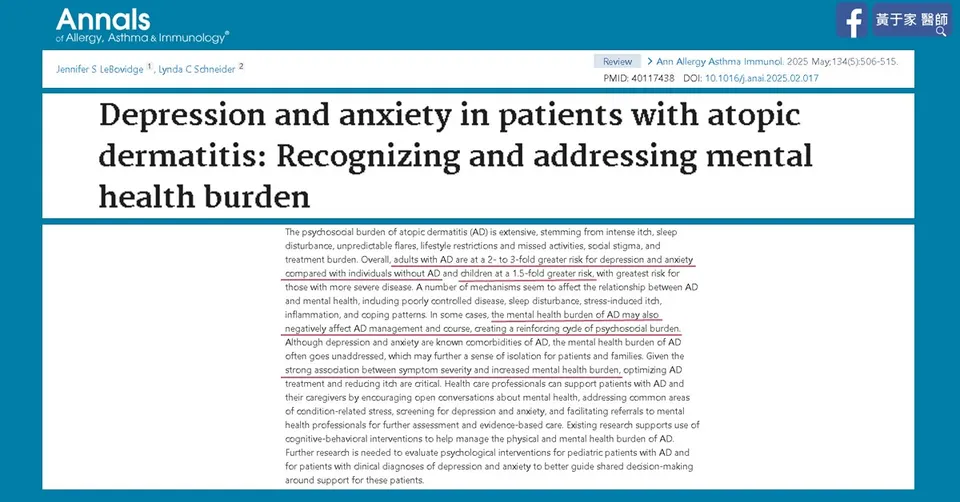
本篇研究,“Depression and anxiety in patients with atopic dermatitis: Recognizing and addressing mental health burden”,請見這裡(外部網站),期刊摘要如下:
The psychosocial burden of atopic dermatitis (AD) is extensive, stemming from intense itch, sleep disturbance, unpredictable flares, lifestyle restrictions and missed activities, social stigma, and treatment burden.
Overall, adults with AD are at a 2- to 3-fold greater risk for depression and anxiety compared with individuals without AD and children at a 1.5-fold greater risk, with greatest risk for those with more severe disease.
A number of mechanisms seem to affect the relationship between AD and mental health, including poorly controlled disease, sleep disturbance, stress-induced itch, inflammation, and coping patterns. In some cases, the mental health burden of AD may also negatively affect AD management and course, creating a reinforcing cycle of psychosocial burden.
Although depression and anxiety are known comorbidities of AD, the mental health burden of AD often goes unaddressed, which may further a sense of isolation for patients and families. Given the strong association between symptom severity and increased mental health burden, optimizing AD treatment and reducing itch are critical.
Health care professionals can support patients with AD and their caregivers by encouraging open conversations about mental health, addressing common areas of condition-related stress, screening for depression and anxiety, and facilitating referrals to mental health professionals for further assessment and evidence-based care.
Existing research supports use of cognitive-behavioral interventions to help manage the physical and mental health burden of AD. Further research is needed to evaluate psychological interventions for pediatric patients with AD and for patients with clinical diagnoses of depression and anxiety to better guide shared decision-making around support for these patients.
原始論文
LeBovidge JS, Schneider LC. Annals of Allergy, Asthma & Immunology. 2025;134(5):506-515. doi:10.1016/j.anai.2025.02.017
論文摘要(Google 翻譯)
以下為 Google 翻譯,並校正明顯錯誤,僅供參考,內容以英文原文為準。
異位性皮膚炎患者的憂鬱與焦慮:認識並處理心理健康負擔
異位性皮膚炎(AD)的心理社會負擔相當廣泛,來自劇烈搔癢、睡眠障礙、無法預測的發作、生活方式受限與錯過活動、社會污名,以及治療負擔。
整體而言,與無 AD 者相比,成人 AD 患者發生憂鬱與焦慮的風險高 2 至 3 倍,兒童高 1.5 倍,且病情越嚴重者風險越高。
有多種機制似乎會影響 AD 與心理健康之間的關係,包括疾病控制不佳、睡眠障礙、壓力誘發的搔癢、發炎與因應模式。在某些情況下,AD 的心理健康負擔也可能對 AD 的處置與病程造成負面影響,形成心理社會負擔不斷強化的循環。
雖然憂鬱與焦慮是 AD 已知的共病,但 AD 的心理健康負擔常未被處理,可能加深患者與家屬的孤立感。由於症狀嚴重度與心理健康負擔增加密切相關,優化 AD 治療並減輕搔癢至關重要。
醫療專業人員可透過鼓勵公開談論心理健康、處理與疾病相關的常見壓力來源、篩檢憂鬱與焦慮,並協助轉介心理健康專業人員進一步評估與接受實證照護,來支持 AD 患者及其照顧者。
現有研究支持以認知行為介入協助處理 AD 的身心健康負擔。仍需進一步研究,評估針對兒童 AD 患者,以及臨床診斷為憂鬱與焦慮之患者的心理介入,以更好地引導支持這些患者的共同決策。
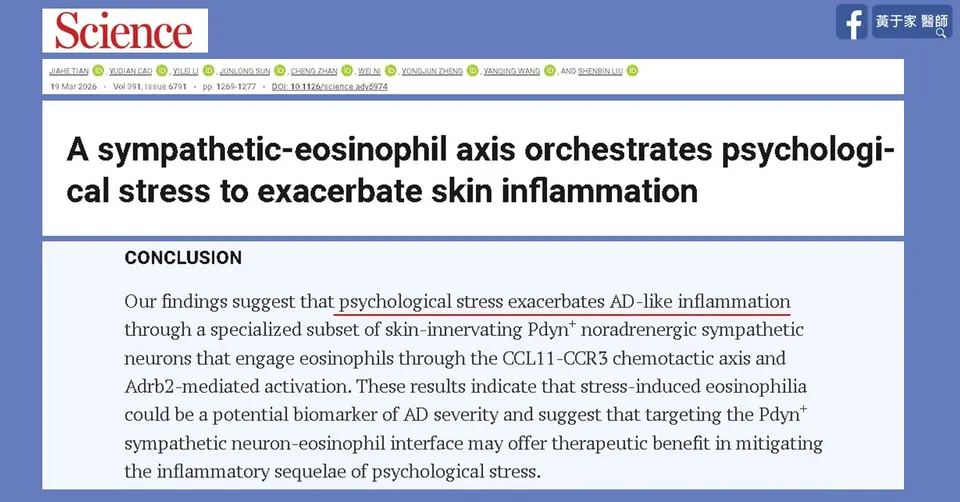
這也呼應了頂尖期刊 Science 的研究:壓力會導致異位性皮膚炎惡化。
異位性皮膚炎,中醫經方的治療實例,請見這裡。
小兒異位性皮膚炎,中醫經方的治療實例,請見這裡。
成人異位性皮膚炎,中醫經方的治療實例,請見這裡。
異位性皮膚炎,期刊研究,請看這裡。
期刊研究整理,請見這裡。
接下來讀這幾篇
原文發表於 作者部落格(舊部落格)。