你知道會去看中醫的異位性皮膚炎孩童有什麼特點嗎?
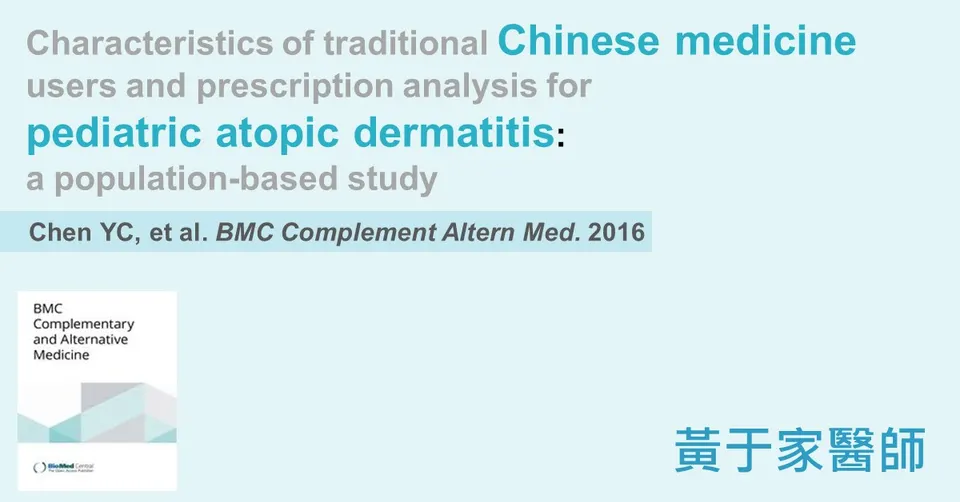
此篇研究(外部網站)刊登於 2017 年 BMC Complementary and Alternative Medicine 期刊,它是依據 2007 年健保資料庫,來探討台灣異位性皮膚炎孩童 ( < 12 歲 )的中醫就診情形。
32 % 的異位性皮膚炎孩童有在看中醫
依據 2007 年健保資料庫,有 42103 位孩童患有異位性皮膚炎,其中 32 % 有看中醫,其餘 68 % 患者沒有看中醫。
看中醫的異位性皮膚炎孩童多半也有過敏性鼻炎
在有看中醫的患者中,以女性、小學生為主,且多半也有過敏性鼻炎,這也呼應到中醫能一次處理多個問題的治療特點,詳情請見 「 一石「三」鳥過敏三兄弟 - 異位性皮膚炎、過敏性鼻炎、氣喘(舊部落格) 」。
有看中醫的異位性皮膚炎孩童不太使用類固醇
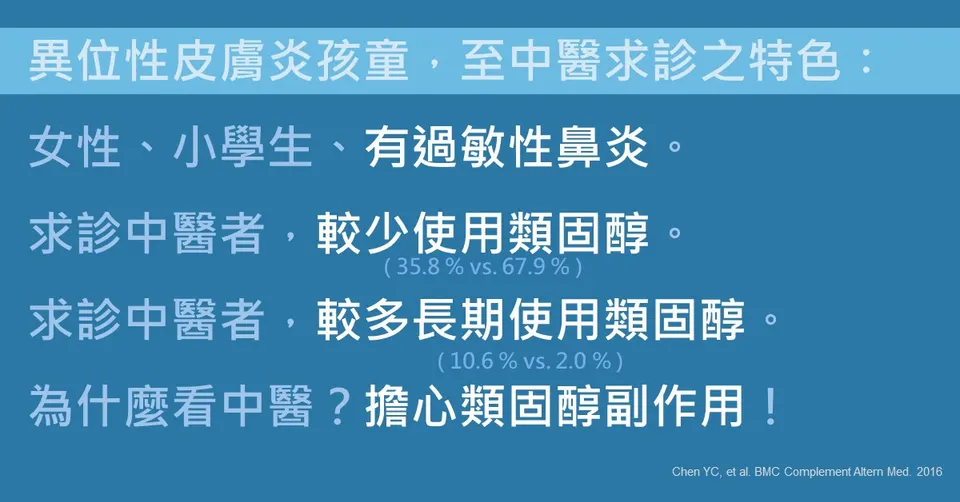
有看中醫的患者,其類固醇使用情形也有其特殊性。看中醫的患者中只有 35.8 % 有在使用類固醇,不看中醫的患者則超過大半都有使用類固醇 ( 67.9 % )。
然而,有看中醫的患者當中,有 10.6 % 有由西醫開立了超過兩周的外用類固醇,但不看中醫的則只有 2.0 % 有被開立此種長期處方。
總括來說,異位性皮膚炎患者中,有 32 % 有在看中醫,這些人當中只有少數會用類固醇 ( 35.8 % ),但有看中醫又有併用類固醇的患者當中,被開立超過兩周以上外用類固醇的比例,又明顯高於完全不看中醫的患者 ( 10.6 % vs. 2.0 % )。
有看中醫但會併用類固醇的,多半是病情較棘手的
換句話說,看中醫的患者很少會使用類固醇,但若真的有在用的話,多半是病情較嚴重的 ( 被西醫開立超過兩周的外用類固醇 )。
害怕類固醇的副作用,為選擇看中醫的重要因素
研究顯示擔心類固醇的副作用為患者看中醫的主要推力。臨床上發現許多異位性皮膚炎患者,一開始的確是因為無法再承受長期塗抹類固醇的副作用 - 皮膚脆弱化,才來中醫就診,而後續治療不但使患者成功戒掉了類固醇,也順道把身體的其他問題一併解決,這樣的情形並不罕見,詳情請見 「 中醫治慢性皮膚病的特色 」。
很少搭配針灸,多只有口服中藥,且處方是由多個方堆疊而成
看中醫的患者,多只口服中藥 ( 93.7 % ),較少搭配針灸,且每次處方多半由五、六個方與單位藥堆疊而成。由於健保資料庫沒辦法蒐集到自費水藥的紀錄,故這篇文章只能單就科學中藥的部份做討論,但疊方的風氣的確是相當盛行,關於處方堆疊所可能因此產生的弊病,請見 「 疊方為什麼不好?(舊部落格)」。
最常用消風散、荊防敗毒散和辛夷清肺散,單位藥最常用甘草、白鮮皮及蟬兌
消風散 ( 31.6 % )、荊防敗毒散 ( 10.6 % )、辛夷清肺散 ( 8.9 % ) 為前三種最常開立的方。最常搭配的單位藥則依次為甘草 ( 16.7 % )、白鮮皮 ( 13.4 % ) 及蟬兌 ( 13.3 % )。
關於處方和單位藥的整理,我認為只能參考,畢竟中醫的精髓在於辯「證」,而不是只按照西醫的診斷碼來開藥,如此的「中西混搭」,反倒會失去中醫獨特地一次處理多個問題的治療特點,而成了困頓之獸。
關於中醫一次處理多個問題的治療特點,還可見 「 治療皮膚乾燥,光補水是沒用的 」。
參考文獻
Chen YC, Lin YH, Hu S, Chen HY. Characteristics of traditional Chinese medicine users and prescription analysis for pediatric atopic dermatitis: a population-based study.(外部網站) BMC Complement Altern Med. 2016 Jun 8;16:173. doi: 10.1186/s12906-016-1158-1.
原始論文
Chen YC, Lin YH, Hu S, Chen HY. BMC Complementary and Alternative Medicine. 2016;16:173. doi:10.1186/s12906-016-1158-1
論文摘要(英文原文)
Characteristics of traditional Chinese medicine users and prescription analysis for pediatric atopic dermatitis: a population-based study
Background: Atopic dermatitis among children is an important issue due to relapses and skin manifestations. Traditional Chinese medicine (TCM) is commonly used to treat children with atopic dermatitis. The aim of this study was to investigate the characteristics and TCM prescriptions of patients with atopic dermatitis using a nationwide database.
Methods: Children younger than 12 years of age diagnosed with atopic dermatitis, defined as ICD-9-CM codes 691.8 and 692.x, were identified from the database. Data on age, diagnosis codes, area of residence and use of corticosteroids of the TCM users were recorded. Association rule mining was used to analyze the prescriptions used for atopic dermatitis.
Results: We identified 13,646 children with atopic dermatitis using TCM in 2007. Female gender (OR: 0.83 for male gender), adolescence (OR: 10.0, 95 % CI: 8.88–11.15) and allergic rhinitis (OR: 2.44, 95 % CI: 2.10–2.85) were associated with the use of TCM. Fewer of the TCM users were prescribed with corticosteroids (35.8 % of all TCM users), but the TCM users had a higher rate of long-term topical corticosteroid therapy (10.6 % for TCM users versus 2.0 % for those who did not use TCM). Chinese herbal medicine (CHM) was used by 93.7 % of all TCM users in 36,398 prescriptions. On average, 5.6 kinds of CHM were used in combination. The relationship between the CHMs constituted a network, in which Xiao-Feng-San was the core treatment for atopic dermatitis.
Conclusions: In this study, we described the characteristics of children with atopic dermatitis who use TCM in Taiwan. and identified the core CHM treatment. Further research on the safety and efficacy of this treatment are still needed.
摘要引自原始論文,依 CC BY 4.0(外部網站) 授權轉載。
論文摘要(Google 翻譯)
以下為 Google 翻譯,並校正明顯錯誤,僅供參考,內容以英文原文為準。
小兒異位性皮膚炎中藥使用者特徵及處方分析:基於人群的研究
背景:兒童異位性皮膚炎由於復發和皮膚表現而成為一個重要問題。傳統中醫 (TCM) 常用於治療兒童異位性皮膚炎。本研究的目的是利用全國資料庫調查異位性皮膚炎患者的特徵和中醫處方。
方法:從資料庫中識別出診斷為異位性皮膚炎(定義為 ICD-9-CM 代碼 691.8 和 692.x)的 12 歲以下兒童。記錄中醫使用者的年齡、診斷代碼、居住地區及皮質類固醇使用等數據。使用關聯規則挖掘來分析治療異位性皮膚炎的處方。
結果:我們找出 2007 年使用中醫的異位性皮膚炎兒童,共 13,646 名。女性(男性的OR:0.83)、青春期(OR:10.0,95%CI:8.88-11.15)和過敏性鼻炎(OR:2.44,95%CI:2.10-2.85)與中藥的使用有關。中醫使用者中,使用皮質類固醇的比例較低(佔所有中醫使用者的 35.8%),但長期使用外用皮質類固醇的比例較高(中醫使用者為 10.6%,未使用中醫者為 2.0%)。93.7% 的中醫使用者使用中草藥,共 36,398 張處方。平均每張處方組合使用 5.6 種中藥。中藥之間的關係構成了一個網絡,其中消風散是治療異位性皮膚炎的核心。
結論:在這項研究中,我們描述了台灣使用中醫治療的異位性皮膚炎兒童的特徵。並找出核心的中藥處方。仍需要進一步研究這種治療的安全性和有效性。
接下來讀這幾篇
原文發表於 作者部落格(舊部落格)。